TallSlimCollins
Stevan Collins Lazich · Memphis, TN
"Some things are worth saving—not because they are old or fashionable, but because they meant something to the people who built this city."
From the European antique drapery workrooms above Madison & Belvedere in the 1980s, to late-night shifts at Babylon Café and The Antenna Club, through gallery canvas conservation, to the dual practice today: explore the chronological scrapbook of field notes, workrooms, and physical artifacts.
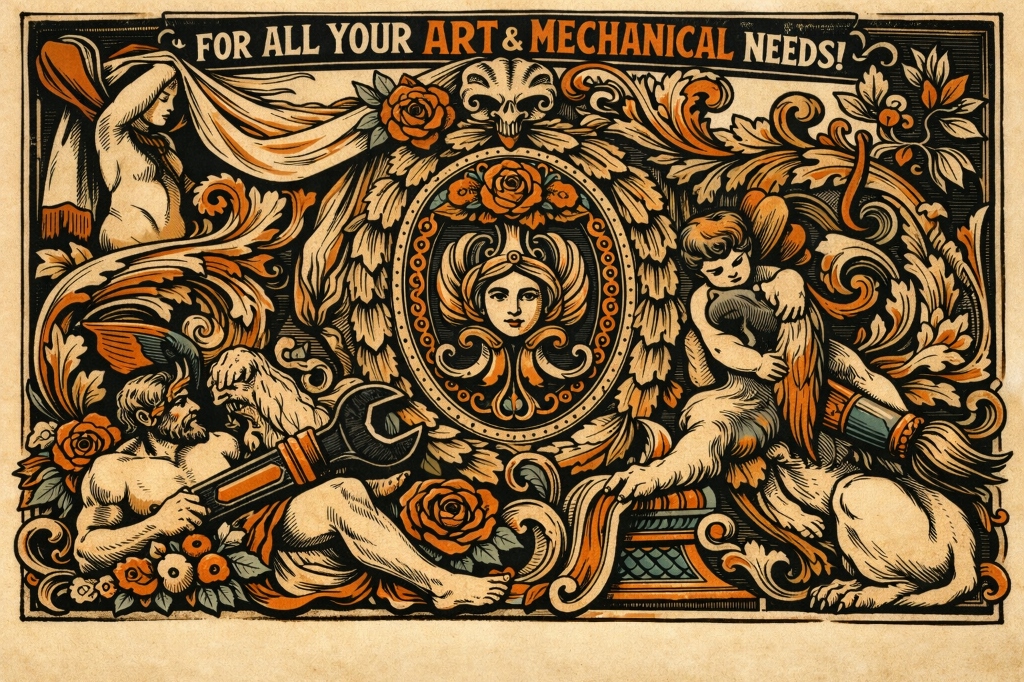
"Drapery weights, tin-ceiling rattles, architectural salvage, and wearable Mid-South memoirs across four decades."
Every body of work is built around a distinct chapter of oral history, Mid-South architecture, or tradesperson craft.
Lost Midtown sanctuaries, late-night characters, neon hum, and the legends who owned the streets after midnight.
Seven sharecropper sisters in the Arkansas Delta. Cast-iron skillets, cotton dust, heirloom okra, and stubborn grit.
Dedicated to the loyal supervisors snoozing in the sawdust beneath workbenches and keeping watch over honest work.
Wearable artifacts, heavyweight tees, embroidered caps, and art prints fulfilled directly through Threadless.

A multidisciplinary practice rooted in Midtown porches, salvaged tradecraft, living oral histories, and four decades of physical craft in the Mid-South.
The shirt is the physical artifact. The oral history is the living soul.
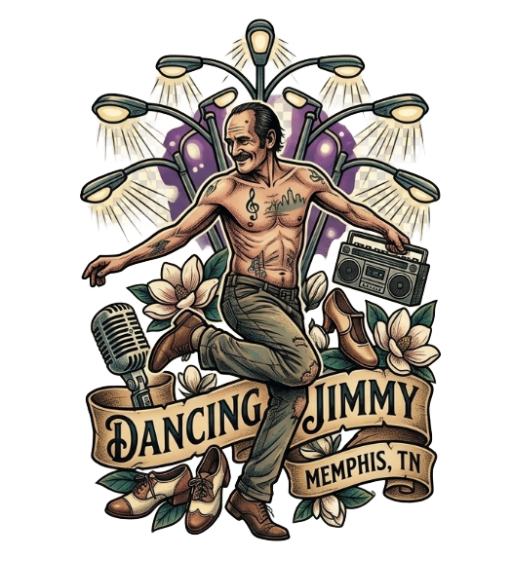
"Living above my mom’s antique store at Madison & Belvedere, I got hired to mow the corner park across the street for $35—the exact price of a Libertyland season pass. First week on the job, I learned what I really signed up for: extracting empty Stag bottles from the azaleas, and once a week, pulling Dancing Jimmy out of the shrubs and hosing the vomit and sweat off him. Midtown life was rich..."
"Tucked in the gravel alleyway behind 1783 Union was a two-story wooden clapboard sanctuary that smelled like fresh rosemary, hand-cranked pasta, and dark roasted coffee. Between 1991 and 1993, I was the café’s all-around 'Boy Friday.' It was the kind of room where Cyndi Lauper could slip in the back door after soundcheck, Laurie Anderson could sit quietly over an espresso, or a delegation of Tibetan monks in saffron robes could dine at midnight without a single soul staring..."
"If you walked into 1588 Madison on a Tuesday night in the eighties or nineties, your sneakers instantly stuck to the linoleum. Narrow as a bowling alley, smelling of clove cigarettes, damp leather, and decades of spilled draft beer. Black Flag, Sonic Youth, The Replacements, Hüsker Dü, and Alex Chilton tore through that tiny stage. You were close enough to get sweat flung onto your shirt when the drummer hit the crash cymbal. It was where the city kept its teeth..."
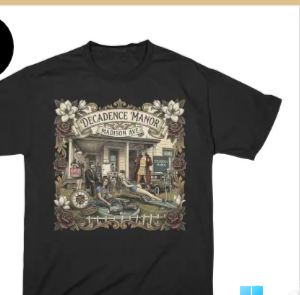
"If you ever spent a summer night walking the sidewalk of Madison Avenue in the golden age of Midtown, you knew the porch before you even reached the gate. A sprawling wooden manor framed by blooming Southern magnolias, thorny heirloom roses, grandfather clock faces, and an uncurated garden of architectural salvage. It was a living, breathing sanctuary for artists, night owls, and lovable eccentrics who refused to live in beige suburbs..."